
Shadow Work With a Practitioner: How to Choose a Trauma-Aware Healer

Updated: 37 minutes ago

Shadow work, in a spiritual context, is practitioner-led inner work that helps you meet and reintegrate parts of yourself you have disowned, exiled, or simply forgotten. It is not psychotherapy, and it does not require a diagnosis or a clinical framework. If you want guided support, look for healers who offer shadow integration, energy work, or shamanic sessions, and start slowly, with someone who talks openly about pacing and aftercare.
TL;DR:
Shadow work can take weeks or months to fully integrate, requiring consistent daily practices like journaling and gentle movement.
Practitioners often offer structured sessions lasting about one to two hours, with immediate aftercare such as rest and hydration recommended.
Choosing a healer involves asking about follow-up support, trauma-awareness, clear session details, and avoiding practitioners promising cures or pressuring long-term commitments.
Those experiencing severe mental health issues or living in unsafe conditions should pause shadow work and seek professional clinical support first.
Support for integration includes small daily routines, environment adjustments, and slowing down if spiritual practices leave you feeling scattered or overwhelmed.
Table of Contents
What Does Shadow Work Mean in Spiritual Practice?
If you have ever felt like your grief, your restlessness, or your anger belongs to someone standing just outside the room, shamanic and energy work traditions have a name for that feeling. They describe the shadow not as a flaw to fix, but as territory. Parts of you traveled somewhere else, often during a hard season, and shadow work is the practice of going to find them.
In shamanic language this is sometimes framed as soul retrieval: a fragment left, and a guide helps bring it home. What comes back after that kind of session does not settle instantly. Integration can take months, and it usually asks something of your daily life, not just your inner world.
This work sits beside medical and mental health care, not in place of it. A healer can open a door and hold space while you walk through it. What happens on the other side of that door is still yours to carry, gently and at your own pace.
What Are the Common Practitioner Approaches to Shadow Work?
Different healers meet the shadow differently, and knowing the shape of each approach helps you choose one that fits your temperament rather than one that simply sounds impressive.
Reiki-based shadow sessions use hands-on or hands-off energy work to soften what feels stuck, often quiet and slow moving.
Shamanic soul retrieval works with the idea of fragmented soul parts and focuses on returning and welcoming them home.
Guided inner journeys use visualization or light trance to help you meet a disowned part in an internal, symbolic landscape.
Ritual-based integration structures the session around a theme, a “voice of the shadow” writing exercise, and a deliberate closing.
Journaling and reflective practice works well as a gentler entry point before deeper energy or shamanic sessions.
If you tend toward stillness, Reiki or guided journeying may feel more spacious. If you want something more active and structured, ritual work or shamanic sessions might suit you better.
What Happens During a Practitioner-Led Shadow Work Session?
A session usually moves through the same basic arc, whether the practitioner works with energy, ritual, or shamanic method. Knowing the shape ahead of time helps your nervous system settle into it instead of bracing against the unknown.
Intake and boundaries. The practitioner asks what you are carrying, what you hope to explore, and sets agreements about pace and consent.
Core practice. This might be energy work, a guided journey, ritual writing, or shamanic journeying, depending on the modality.
Grounding and closure. Sessions commonly include a deliberate closing, sometimes a spoken phrase or gesture, to signal that the work is contained for now.
Immediate aftercare. Water, rest, and quiet time are often suggested right after the session ends.
Structured ritual sessions frequently run for an extended period, often around one and a half to two hours, though energy work sessions can be shorter. It is common to feel tender, tired, or unusually emotional in the hours after, sometimes for a day or two.
Pro Tip: Keep your evening open after a first session. Skip the errands and the difficult phone calls. Let your body have the quiet it is asking for.
How Do You Choose a Healer or Guide for Shadow Work?
The right practitioner is not the one with the most dramatic promises. It is the one who talks about your pace, not just their method.
Ask how they structure follow-up or integration support after a session.
Ask whether they screen for trauma history or ask about anything that would make a session unsafe for you right now.
Ask what a typical session length and fee look like, and whether they offer a shorter introductory format.
Notice their language. Someone speaking in trauma-aware terms will talk about consent, pacing, and choice rather than pushing you forward.
Walk away from anyone who promises a cure, pressures you into a longer package before you have had one session, or brushes past your boundaries when you ask a question. A grounded practitioner welcomes your caution. If you want a starting point for what those conversations should sound like, how to describe what you are carrying to a healer is worth reading before you book anything, and this guide to finding a healer you can trust covers more of the vetting questions in depth.
How Do You Support Integration After a Shadow Work Session?
What returns during a session does not stay settled on its own. Shamanic tradition often pairs retrieval work with specific changes at home: different food, different routines, small adjustments that tell the returned part the environment is actually safer now. Integration is less about ceremony and more about proof, offered daily, in ordinary choices.
Spend two to twelve minutes a day noticing where you carry tension in your body, without trying to fix it.
Journal within a few days of a session to track what is shifting.
Add short breathwork or slow movement, especially in the evenings.
Simplify your environment where you can. Clear a cluttered corner, protect your sleep, reduce noise.
Many guides recommend a rhythm of sessions spaced regularly over time rather than one dramatic encounter, since integration favors repetition over intensity.
Pro Tip: If a practice ever leaves you feeling more scattered than grounded, that is information, not failure. Slow down and lean on inner work practices for deepening your spirituality for gentler entry points.
When Should You Pause Shadow Work and Seek Clinical Support?
Spiritual practice can open doors that deserve care, and some doors need a clinician standing beside you when they open. If you experience severe dissociation, thoughts of suicide, symptoms of psychosis, or you are living in unsafe conditions, pause shadow work and reach out to a doctor or mental health professional first.

A grounded practitioner will recognize these signs and encourage you to coordinate care rather than push forward alone. Spiritual support can sit alongside medical and psychiatric treatment, but it is never a substitute for it. Learn more about pairing spiritual support with clinical care before you begin.
Find a Healer Who Fits: How Spiritual Network Helps You Connect
You are not meant to walk this alone, and you are not meant to explain yourself twice to people who only half listen. If you have felt unseen by others who treat this work as strange or unserious, that loneliness is real, and it deserves more than silence.

Spiritual Network is a searchable directory of healers, energy workers, and shamanic guides, alongside sessions, workshops, retreats, and events happening worldwide and near you. You can filter by modality and read practitioner descriptions to find those who mention shadow integration, trauma-aware language, and clear session structure. This is not a place that promises a cure. It is a place that helps you find someone qualified to walk beside you while you do this work at your own pace. Booking one introductory session with a healer whose language feels honest is often the clearest first step, and it can lead you toward retreats or events where you meet others quietly walking a similar path. Everything connects through the free Spine App, so you can search, follow practitioners, and return to what resonates instead of starting over each time. Visit Spiritual Network to begin looking for a guide who fits where you are.
Further Reading and Spiritual Network Resources
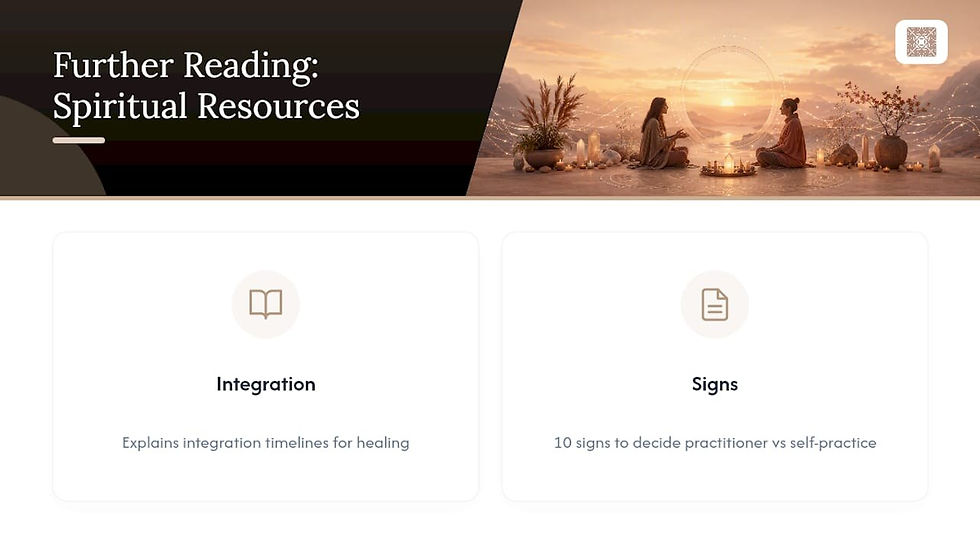
If you want to go deeper, what spiritual integration means for healing expands on integration timelines, and 10 signs you need spiritual healing right now can help you decide whether now is the right moment to seek a practitioner or begin with self-practice.
FAQ
What Is Shadow Work in a Spiritual Context?
Shadow work in a spiritual context is practitioner-led inner work that helps you meet and reintegrate parts of yourself you have disowned, exiled or simply forgotten. It is often offered through energy healing, Reiki or shamanic sessions. Unlike psychotherapy, it needs no diagnosis or clinical framework, and it works best slowly, with a practitioner who talks openly about pacing, consent and aftercare.
Is Shadow Work the Same as Therapy?
No. Shadow work offered by spiritual healers is a spiritual practice, not psychotherapy: practitioners are not licensed to diagnose or treat mental illness, and the term carries no regulated qualification. It can sit alongside therapy, and many people use both. If you are already in therapy, tell your therapist about the sessions, and choose a practitioner who refers you on when something clinical comes up.
How Long Does Integration Take After a Session?
Integration usually takes weeks to months, not one evening. What surfaced in a session needs rest, time and small changes in daily life to settle, such as steadier routines, gentle movement, writing down what came up or talking it through with someone you trust. Many guides space sessions out regularly rather than booking one dramatic encounter, and some tiredness or tenderness in the first days afterwards is common.
How Do I Find a Qualified Healer for Shadow Work?
Spiritual Network, a worldwide directory of healers, energy workers and shamanic guides, lets you search by modality, read descriptions for shadow integration, trauma-aware language and clear session structure, and find sessions or workshops online or near you through the free Spine App. There is no shared qualification for shadow work, so check training, aftercare and referral practice yourself. A blue check shows voluntary verification, not an endorsement.
What Should I Ask Before Booking a Session?
Before booking, ask how they pace a session and what they do if you become overwhelmed, how they handle consent and boundaries, and what integration support they offer afterwards. Ask about session length and fees, whether a shorter introductory session is available, and when they refer clients to a therapist. Clear, unhurried answers are a good sign; irritation at the questions tells you just as much.
What Are Red Flags in a Shadow Work Practitioner?
Red flags include promises of a cure or a breakthrough, pressure to buy a long package before your first session, and a guide who dismisses your questions or pushes past a no. Be wary, too, of anyone who discourages therapy or medical care, pushes you to relive trauma quickly, or asks you to keep the work secret. Any one of these is reason enough to stop.
When Should I Pause Shadow Work for Clinical Support?
Pause and contact a doctor or mental health professional if you experience severe dissociation, flashbacks that do not settle, suicidal thoughts, signs of psychosis such as hearing or seeing things others do not, or if your living situation is unsafe. These need clinical or safety support first; spiritual work can resume later, alongside it. If you are in crisis in the US, call or text 988.
About Spiritual Network
Spiritual Network connects you with spiritual healers, energy workers and holistic guides worldwide, online or near you, through the free Spine App. Founded by Sylvia Leifheit.
Written by the Spiritual Network Editorial Team.
Comments