
Spiritual Help After Trauma: A Practical Seeker's Guide
- Sylvia
- 7 hours ago
- 9 min read
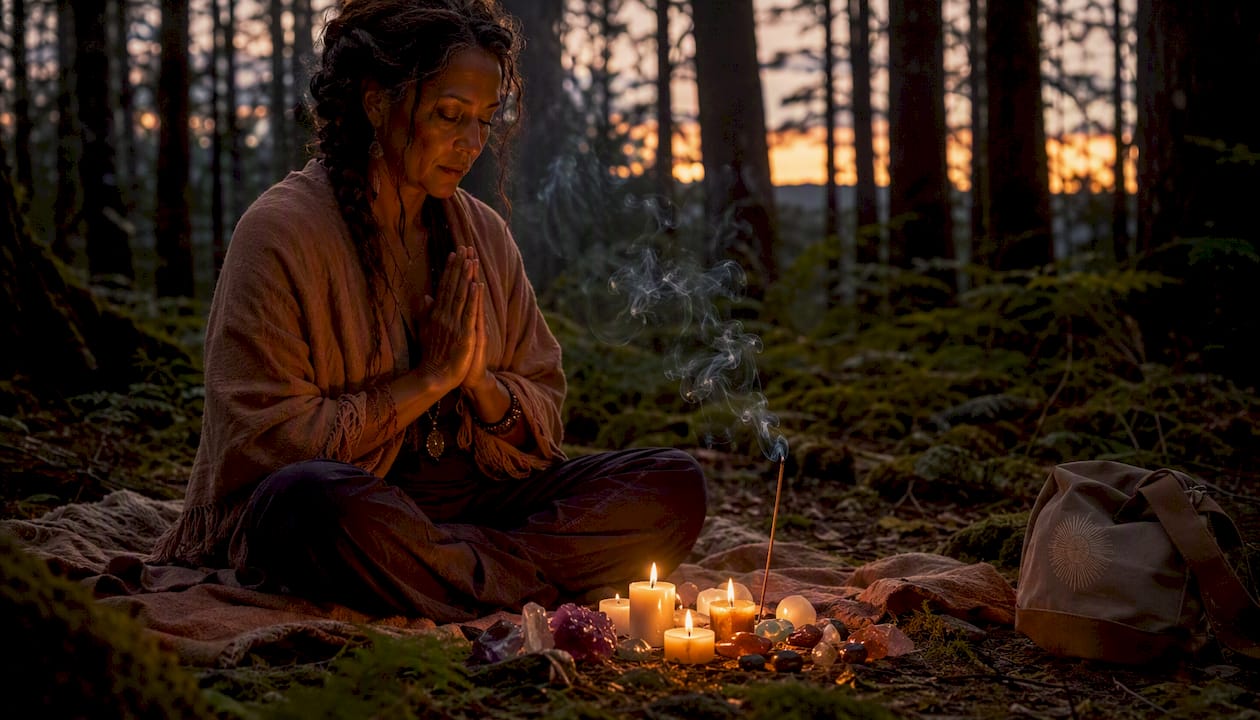
Trauma-aware spiritual support can safely accompany clinical care and open real pathways for meaning, embodiment, and community. If what you are carrying feels heavier than sleep or time can touch, you are not imagining it, and you are not alone. Three things to do right now: stabilize your physiology first (breathe, drink water, feel your feet on the floor); look for practitioners who explicitly use trauma-aware approaches; and try the two-minute grounding practice in Section 6 before anything else.
Stabilize first. Ground your body before any spiritual practice or session.
Screen practitioners. Ask directly whether they work with trauma and how they handle distress in session.
Seek medical support if what you are carrying worsens or interferes with daily life after about a month. NIMH guidance notes that distress that persists or worsens beyond a few weeks warrants professional support.
Pro Tip: You do not have to choose between a therapist and an energy healer. The most grounded seekers work with both at the same time.
Table of Contents
What can spiritual support actually do after trauma?
Spiritual and energetic support after trauma tends to work in a specific lane: meaning-making, nervous-system accompaniment, community, and ritual. It does not replace psychiatric care, medication, or trauma-focused therapy. What it can do is open a door that clinical settings often leave closed.

Research into prayer and meditation practices shows measurable changes in brain activity linked to calming and regulation, including shifts in the cingulate gyrus, thalamus, GABA, and dopamine. That is not a cure. It is a signal that the body responds to spiritual practice in ways that matter.
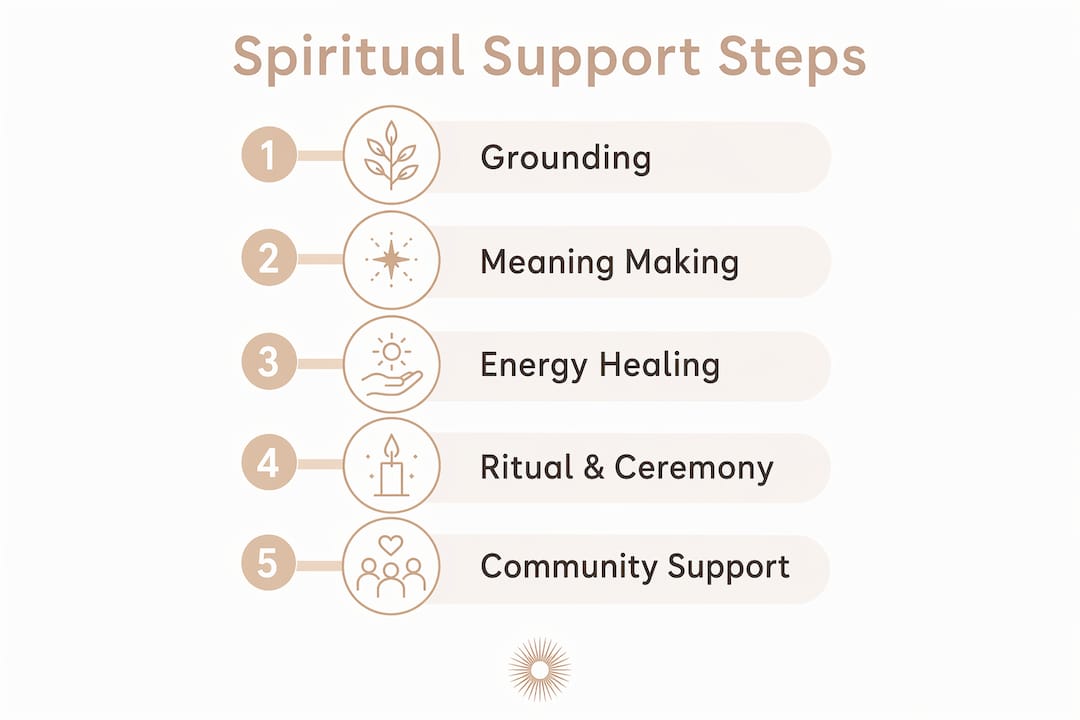
Trauma often creates what researchers call “sacred dissonance,” a conflict between what happened and what a person believed about the world or themselves. Feelings of guilt, emptiness, or spiritual estrangement are common after traumatic events. A trauma-aware spiritual practitioner creates space to sit with that dissonance rather than rushing past it. The VA’s National Center for PTSD notes that spiritual dimensions can and should be assessed and addressed in trauma care, and that some manualized interventions explicitly target spiritual concerns.
One important caution: spiritual practices can become a way to perform calm while the nervous system stays dysregulated. This is called spiritual bypassing, and it looks like polished meditation or gratitude practices used to avoid grief, anger, or somatic distress. Trauma-aware spiritual integration treats the body as central, not something to transcend.
This article was written by Sylvia, who writes on spiritual practice and integration for Spiritual Network. It is general information, not medical or therapeutic advice. Please consult a qualified professional for your own situation.
What types of spiritual support do people use after trauma?
There is no single right modality. What matters is fit: your body, your history, your relationship to meaning. Here is a concise map of the most common options.
Somatic practices and trauma-sensitive yoga work directly with the body’s held responses. They suit people who feel disconnected from their physical self or who find talk-based approaches leave something unspoken. Somatic work can be intense; always prefer a practitioner trained in trauma-sensitive approaches.
Energy healing and Reiki work with the body’s energetic field, often through light touch or no touch at all. Many people find these approaches accessible precisely because they are gentle and non-invasive. They tend to suit those who want a quiet, receptive experience rather than an active one.
Shamanic and ancestral practices draw on ritual, ceremony, and connection to lineage or land. These can be profoundly meaningful, and they carry real responsibility. Engage only with practitioners who approach indigenous or cultural traditions with genuine respect and informed consent, never as performance.
Spiritual direction and intuitive guidance offer a contemplative space for meaning-making conversations. They suit people who are asking the harder questions: Why did this happen? What does my life mean now? These are not therapy sessions, and a good practitioner will say so clearly.
Nature-based practices and creative expression need no practitioner at all. Walking in a forest, tending a garden, making art, or writing can reconnect you to meaning without any religious framework. The role of nature in spiritual practice is well-documented as a grounding force after loss or shock.
Peer groups and ritual community offer belonging and structure. Community and ritual can be protective after trauma, contributing to resilience and posttraumatic growth when integrated carefully with other care.
Pro Tip: If a modality feels too intense in the first session, that is information, not failure. A trauma-aware practitioner will slow down or stop without question.
How do you find and screen a trauma-aware practitioner?
Prioritize trauma-aware process, clear consent practices, and an explicit scope of services. A practitioner who cannot describe how they handle distress in session is not ready to work with trauma.
Practitioner checklist:
Clear scope of practice (what they do and what they do not do)
Habit of referring to therapists or medical providers when needed
Explicit discussion of consent and boundaries before the first session
Pacing that respects your window of tolerance
An integration plan or follow-up guidance after sessions
Willingness to coordinate with your existing clinical care team
Questions to ask on an intake call:
How do you work with people who have experienced trauma?
What do you do if I become distressed during a session?
Do you have a referral relationship with therapists or doctors?
How do you handle consent and boundaries in your practice?
What does a typical session look like, and how long does it run?
What is your approach to pacing and safety?
Red flags to watch for:
Pressure toward intense experiences before trust is established
No discussion of consent, safety, or pacing
Promises to fix, cure, or remove trauma
Requests for secrecy about the work
No referral policy or dismissal of clinical care
What should you expect in your first session?
Most first sessions with a spiritual or energy practitioner follow a recognizable shape: an intake conversation, a brief safety check, a short practice or exchange, and some form of integration guidance before you leave.
Typical session flow:
Intake (10–15 minutes): The practitioner asks about what you are carrying, your intentions, and any relevant history. This is where consent and boundaries are established.
Safety check (5 minutes): A brief grounding or orienting exercise to settle the nervous system before deeper work begins.
Core practice or exchange (20–40 minutes): The main work, whether Reiki, somatic movement, guided visualization, or another modality.
Integration (10 minutes): Time to return to ordinary awareness, share what arose, and receive guidance for the days ahead.
Before your session:
Note any medications or medical conditions relevant to touch or breath work
Wear comfortable, loose clothing
Identify one person you can contact afterward if you need grounding support
Write down your consent boundaries in advance
After your session:
Journal briefly about what you noticed, without judgment
Use a short grounding practice (feet on floor, slow breath, name five things you can see)
Monitor how you feel over the next 24–48 hours and contact the practitioner or your therapist if distress intensifies
Short spiritual practices you can try today
These practices are designed to be brief, low-risk, and adaptable. None of them require a practitioner.
2-minute grounding practice:
Sit or stand with both feet flat on the floor.
Press your feet down gently and feel the contact.
Take three slow breaths, exhaling longer than you inhale.
Name five things you can see in the room.
Safety tip: If feelings intensify, open your eyes fully, look around slowly, and return to the breath.
10-minute embodied breath or walking practice:
Walk slowly, indoors or outside, at about half your normal pace.
With each step, notice the sensation of contact between foot and ground.
Breathe naturally; do not force a rhythm.
If thoughts pull you away, return attention to the next step.
Safety tip: Keep eyes open. Pair with a trusted person if you feel unsteady.
20-minute nature or creative expression practice:
Sit outside or near a window with natural light.
Spend five minutes simply observing: clouds, leaves, light, sound.
Then write, draw, or move freely for fifteen minutes without a goal.
Safety tip: Set a gentle timer. If strong feelings arise, pause and ground before continuing.
For building sustainable practices over time, shorter and more frequent sessions tend to serve better than long, infrequent ones.
When should you prioritize medical or mental-health care?
If what you are carrying interferes with daily life, sleep, work, or relationships beyond about one month, seek professional support. NIMH guidance indicates that distress persisting or worsening after roughly one month warrants external help. The Better Health Channel similarly notes that the body usually begins to reset within about one month; difficulties continuing beyond three to four weeks are a signal to reach out.
If you are in crisis right now: Call or text 988 (Suicide and Crisis Lifeline, available 24/7 across the United States) or call 911 if there is immediate danger.
Spiritual support for depression or persistent low mood works best when it runs alongside clinical care, not instead of it. Ask any practitioner you work with how they coordinate with therapists or doctors. A practitioner who dismisses that question is not trauma-aware.
Key Takeaways
Trauma-aware spiritual support works best when it accompanies clinical care, begins with grounding, and is delivered by practitioners who explicitly discuss consent, pacing, and referrals.
Point | Details |
Seek help after about one month | If distress persists or worsens beyond about one month, seek professional medical or mental-health support. |
Screen every practitioner | Ask how they handle distress in session, whether they refer to clinicians, and how they approach consent. |
Start with grounding | Begin any spiritual practice with a brief grounding exercise to stabilize the nervous system first. |
Spiritual bypassing is a real risk | Practices that help you perform calm without processing grief or somatic distress can deepen avoidance. |
Spiritual Network as a doorway | Search the Spiritual Network directory or use the free Spine App to find practitioners; the platform does not vet or endorse them. |
Finding trauma-aware spiritual support through Spiritual Network
When you are ready to look for a practitioner, Spiritual Network offers a global directory of spiritual healers, energy workers, and holistic guides, searchable online or near you. Many people arrive here after conventional care has not reached what still aches: grief that lingers, a heaviness that has no name. The platform is a doorway, not a guarantee.
[
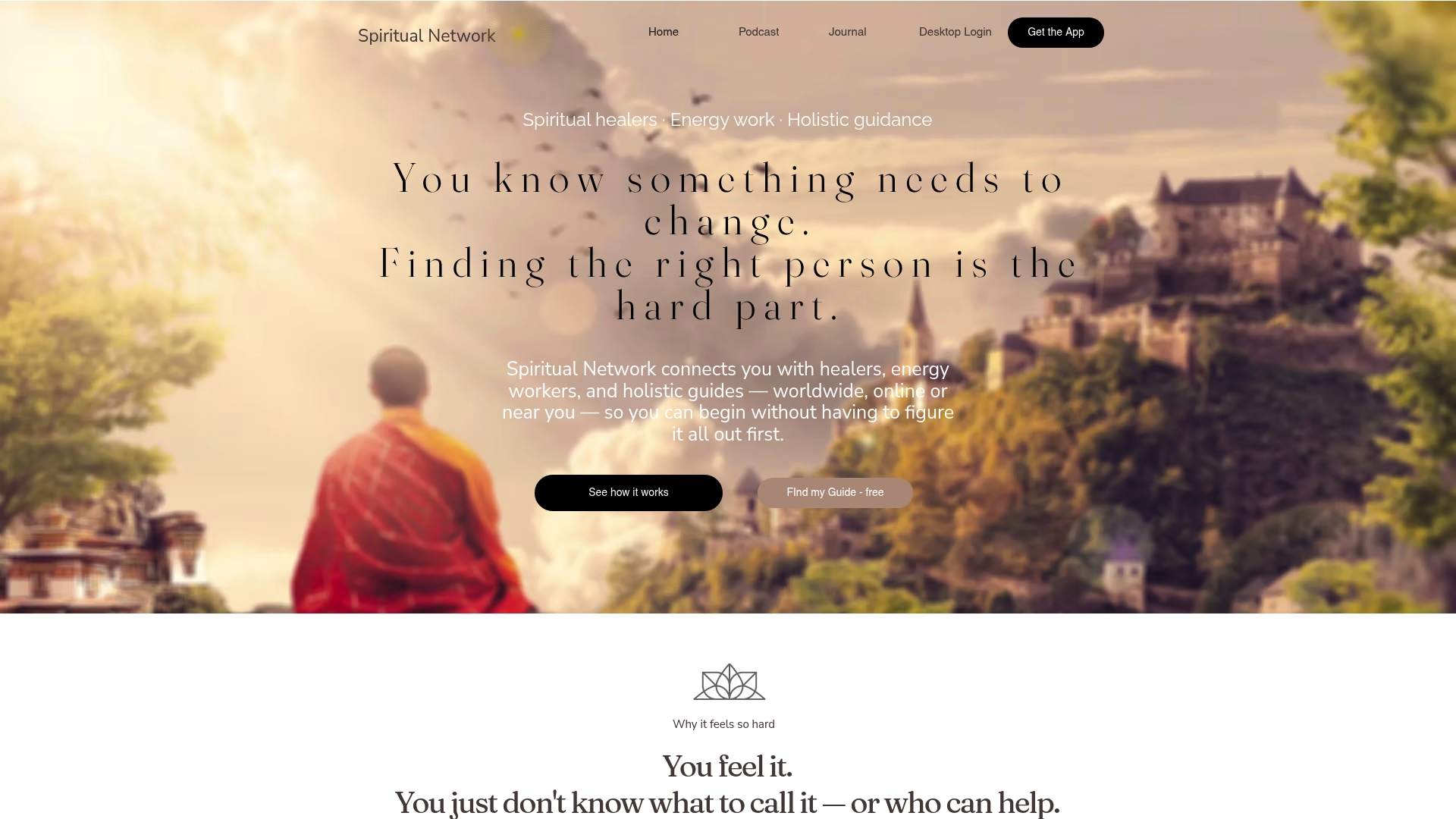
The free Spine App lets you describe what you are going through in your own words and discover healers, practices, events, and podcasts that fit your situation. You can read practitioner descriptions, explore modalities, and reach out directly. Spiritual Network does not vet, verify, or endorse any practitioner listed on the platform. This is not a medical service, and nothing here replaces clinical care. It stands alongside it.
Visit Spiritual Network to search the directory or download the free Spine App and begin finding the kind of support that fits where you are right now.
Useful sources
NIMH: Coping With Traumatic Events — Provides timeline guidance on when distress warrants professional support; used for the one-month threshold throughout this article.
VA National Center for PTSD: Addressing Religious or Spiritual Dimensions of Trauma and PTSD — Clinical guidance on integrating spiritual care into PTSD treatment; supports practitioner screening and coordination recommendations.
Better Health Channel: Trauma Reaction and Recovery — Corroborates the one-month recovery timeline and guidance on seeking help.
Sacred Dissonance: Complex Trauma and Spirituality — Source for sacred dissonance, spiritual bypassing, and the window of tolerance framework used in session and practice guidance.
NAADAC: Spirituality as a Healing Approach for Substance Use Disorders — Research on measurable physiological effects of spiritual practices including prayer and meditation.
Annie Wright: Spiritual Healing After Trauma Without Spiritual Bypassing — Practical source for trauma-safe adaptations, red flags, and the bypassing risk in spiritual practice.
MAT Clinics: Spiritual Practices in Recovery — Supports the secular spiritual options described in the types of support and self-guided practices sections.
FAQ
What is trauma-aware spiritual support?
Trauma-aware spiritual support is any spiritual or energetic practice delivered with explicit attention to consent, pacing, and the nervous system’s capacity. Practitioners adapt their approach to keep you grounded rather than pushing through distress.
Can spiritual help after trauma replace therapy?
No. Spiritual and energetic support accompanies clinical care; it does not replace it. The VA’s National Center for PTSD recommends integrating spiritual dimensions into trauma treatment alongside, not instead of, evidence-based clinical approaches.
How long before I should seek professional help after a traumatic event?
NIMH guidance and the Better Health Channel both point to roughly one month as the threshold. If what you are carrying persists or worsens beyond about one month and interferes with daily life, seek professional medical or mental-health support.
How do I find a trauma-aware spiritual practitioner in the United States?
Ask any prospective practitioner directly how they work with trauma, how they handle distress in session, and whether they refer to therapists or doctors. Spiritual Network’s directory lets you search by modality and location; the free Spine App helps you describe your needs and find practitioners that fit.
What is spiritual bypassing and why does it matter?
Spiritual bypassing means using spiritual practices to avoid rather than process grief, anger, or somatic distress. It can look like polished meditation or gratitude work while the nervous system stays dysregulated. A trauma-aware practitioner will name this risk and work to prevent it.