
What Is a Spiritual Circle? Purpose, Practices, and Benefits

Updated: 1 day ago
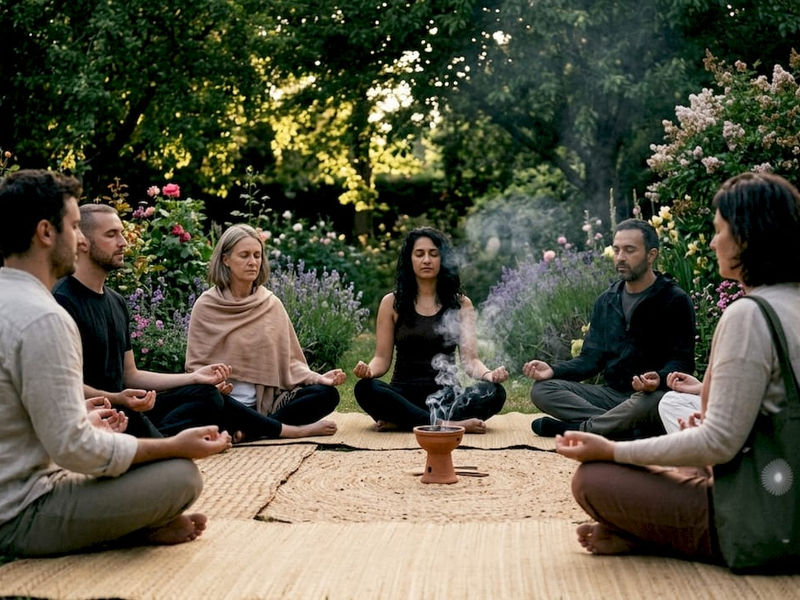
A spiritual circle is defined as an intentional gathering of people who meet regularly to support each other’s spiritual development, healing, and personal growth through shared practices and sacred space. The term “spiritual circle” is widely used, though you may also encounter it called a spiritualist circle, spirit circle, or awakening circle depending on the tradition. Spiritual mentors recommend weekly attendance to build accountability and sustain the group’s energy over time. These gatherings welcome people at every stage, from those who have never meditated to those with years of practice. What makes them distinct is their non-hierarchical structure: no one sits above another, and every voice carries equal weight. If you have been searching for a community that holds space for what aches beneath the surface, a spiritual circle may be exactly what you are looking for.
What is a spiritual circle and what happens during one?
A spiritual circle gathering follows a recognizable shape, even when the specific practices vary. Most sessions open with a ritual that marks the shift from ordinary time into sacred time. Casting the circle is one of the most common of these rituals, using prayer, visualization, or physical markers to establish a protected, focused space. This act signals to everyone present that the work beginning here is intentional and held apart from the noise of daily life.
Once the space is open, participants engage in a range of practices depending on the group’s focus. Common activities include:
Shared meditation to quiet the mind and open awareness
Energy healing work, including techniques drawn from Reiki and other modalities
Intuitive and psychic development, such as clairvoyance and mediumship practice
Trance work and guided visualization
Prayer and intention setting for individual and collective healing
Reflection and sharing to integrate what arises during the session
Groups are kept intentionally small to promote equality and allow each person’s energy to contribute meaningfully to the whole. A circle of five to twelve people tends to create the depth of connection that larger groups cannot sustain.
The leader of a spiritual circle facilitates rather than directs. All participants share responsibility for the group’s energy and the session’s success. This makes the circle a collaborative practice, not a performance or a class. Every person who shows up brings something that the group needs.

Pro Tip: If you are new to spiritual circles, arrive a few minutes early. Sitting quietly before the session begins helps you settle your energy and enter the sacred space with intention rather than distraction.
Why the circle shape carries such deep meaning
The circle is not simply a convenient seating arrangement. Across cultures and centuries, it has served as one of the most powerful symbols in spiritual life. The geometric circle removes hierarchy and eliminates vulnerable entry points, creating a space that feels sovereign and secure. When everyone sits in a circle, no one is at the head of the table. No one is behind or in front. The shape itself communicates safety before a single word is spoken.
“The circle acts as a sacred container, a boundary that holds the group’s energy and intention. It signals that this space is free from judgment and open to the kind of inner work that ordinary settings rarely allow.”
This symbolic function is not abstract. Physical or visual markers often accompany the ritual opening of a circle, such as candles placed at cardinal points, stones arranged on the floor, or a simple cord laid in a ring. These objects make the boundary visible and real. They tell the body, not just the mind, that something different is happening here.
The circle appears in Indigenous medicine wheels, Celtic sacred rings, Tibetan mandalas, and the round tables of Arthurian legend. Each tradition uses it to represent wholeness, eternity, and the unity of all things. The following table shows how different traditions have understood the circle’s spiritual meaning:

Tradition | Circle Symbolism |
Indigenous medicine wheel | The four directions, balance, and the cycles of life |
Celtic sacred rings | Protection, continuity, and connection to the land |
Tibetan mandala | The cosmos, the self, and the path to enlightenment |
Arthurian legend | Equality among peers and shared purpose |
Spiritualist practice | A protected container for collective energy work |
Understanding this symbolism deepens the experience of sitting in a circle. You are not just joining a group. You are stepping into a form that humans have used for thousands of years to hold what matters most.
What types of spiritual circles exist, and how do you choose one?
Spiritual circles come in two broad structures, and knowing the difference helps you find the right fit. Circles can be open or closed, and each carries a distinct commitment level and group dynamic.
An open circle welcomes new participants at any session. This format suits people who are curious, exploring, or not yet ready for a long-term commitment. The energy shifts from week to week as different people arrive, which can feel refreshing and expansive. Open circles are often a good starting point for those new to group spiritual practice.
A closed circle operates with a fixed group of members who commit to attending regularly over a set period. This structure builds deeper trust and allows the group’s energy to develop in ways that open circles rarely achieve. Members learn each other’s rhythms, sensitivities, and growth edges. The work tends to go deeper because the container is more stable.
To start your own spiritual circle, consider these steps:
Clarify your intention. Decide what the circle is for: healing, psychic development, meditation, grief support, or general spiritual growth. A clear purpose attracts the right people.
Invite a small group. Begin with four to eight people you trust. Shared values matter more than shared beliefs.
Choose a consistent time and place. Regularity builds the group’s energy over time. Weekly gatherings work well for most circles.
Establish agreements. Discuss confidentiality, participation expectations, and how the group will handle conflict or discomfort.
Open and close each session with intention. A simple ritual at the start and end marks the sacred container and honors the work done.
Let the group evolve. The circle will find its own rhythm. Stay open to what wants to emerge.
Learning how to connect with a spiritual community that genuinely fits your needs takes time, but starting with clarity about what you are seeking makes the process far less uncertain.
Pro Tip: Safety and trust are the foundation of any effective circle. Before your first session, have an honest conversation with potential members about what non-judgment means to each of you. Shared language around safety prevents misunderstandings later.
What are the benefits of joining a spiritual circle?
The benefits of regular participation in a spiritual circle reach further than most people expect when they first arrive. Spiritual awakening circles provide community for people moving through grief, confusion, and deep transformation. That kind of support is rare. Most conventional settings do not have language for what a spiritual awakening feels like, or for the grief that does not lift no matter how much time passes.
The specific benefits participants report include:
Belonging during transition. Life changes, losses, and awakenings are easier to carry when a community holds space for them without trying to fix or rush the process.
Skill development. Circles offer a safe environment to practice intuitive and energetic skills, including meditation, energy sensing, and mediumship, with others who take the work seriously.
Emotional accountability. Showing up regularly for a group creates a gentle structure for personal growth that solo practice often lacks.
Amplified healing. Group energy and shared intention can open doors that individual practice alone does not always reach. This is not a guarantee, but it is a pattern that many practitioners recognize.
Perspective and reflection. Hearing how others experience their spiritual path offers mirrors that help you see your own more clearly.
People often arrive at spiritual circles after conventional approaches fall short. The exhaustion that sleep does not fix, the grief that therapy has not touched, the restlessness that has no name. A circle does not replace professional care. It stands alongside it, offering a different kind of presence. You can also read more about what spiritual support looks like to understand how circles fit within a broader picture of healing.
The experience of being witnessed by a group, without judgment and without agenda, is something that many people describe as quietly life-changing. Not dramatic. Not instant. But real, and worth seeking. Community built around shared spiritual purpose, as explored in resources on grief and group healing, consistently shows up as one of the most sustaining forms of support humans can offer each other.
If you are looking for one-to-one work rather than a circle, we compared five apps that list holistic practitioners, with what each covers.
Key Takeaways
A spiritual circle is the most accessible and consistent structure available for combining community support, healing, and personal spiritual growth in one intentional space.
Point | Details |
Core definition | A spiritual circle is an intentional gathering for shared healing, development, and sacred group energy work. |
Circle shape matters | The circular form removes hierarchy and signals safety, making deep inner work possible for every participant. |
Open vs. closed circles | Open circles suit newcomers; closed circles build deeper trust and allow more sustained group development. |
Leader as facilitator | The circle leader guides rather than directs, and every participant shares responsibility for the group’s energy. |
Benefits extend beyond sessions | Regular attendance builds community, develops spiritual skills, and supports people through grief and life transitions. |
Finding your place in a spiritual circle through Spiritual Network
Knowing what a spiritual circle is and actually finding one that fits are two different things. Spiritual Network exists to close that gap.

On the Spiritual Network platform, you can find practitioners, guides, and community spaces that align with your spiritual path, whether you are drawn to energy healing, meditation circles, shamanic work, or awakening support. The free Spine App lets you describe where you are in your own words and surfaces the healers, events, and practices that speak to what you are carrying. Spiritual Network also offers podcasts and audio teachings that can support your growth between gatherings. When you are ready to take the next step, Spiritual Network is a good place to begin.
FAQ
What is the definition of a spiritual circle?
A spiritual circle is an intentional group that gathers regularly to support each other’s spiritual development, healing, and personal growth through shared practices and sacred space. The group typically meets weekly and operates without hierarchy, with every participant contributing equally to the session’s energy.
What happens in a spiritual circle meeting?
Sessions usually open with a ritual that marks sacred space, such as casting a circle, followed by shared meditation, energy work, intuitive practice, and reflection. The specific activities depend on the group’s focus and tradition.
How do I join a spiritual circle?
To join a spiritual circle, first decide between an open circle, where you can drop in to any session, and a closed circle, which expects regular attendance, often weekly. Visit one open session before committing, ask who facilitates and how many people take part, and notice whether the group feels non-hierarchical and safe. Give it a few meetings, because a group's energy usually takes time to settle.
Can a spiritual circle support grief or emotional healing?
Spiritual circles provide community for people moving through grief, spiritual confusion, and life transitions, offering a space that conventional settings often cannot. They work alongside, not instead of, professional care.
How many people are in a typical spiritual circle?
Most spiritual circles are kept small, often between five and twelve participants, to allow genuine connection and effective group energy work. Larger groups tend to reduce the depth of individual participation and shared intimacy.
Where can I find a spiritual circle near me or online?
You can find spiritual circles through Spiritual Network, a worldwide directory of spiritual healers, energy workers and holistic guides who host sessions, workshops, events and retreats online or in person. In the free Spine App you describe what you're looking for in your own words, for example a weekly women's circle or a grief circle, and see matching practitioners and gatherings near you or online. Meditation centers and yoga studios often host open circles too.
About Spiritual Network
Spiritual Network connects you with spiritual healers, energy workers and holistic guides worldwide, online or near you, through the free Spine App. Founded by Sylvia Leifheit.
Written by the Spiritual Network Editorial Team.
Comments