
Try Two or Three Sessions to Find a Spiritual Mentor Who Fits

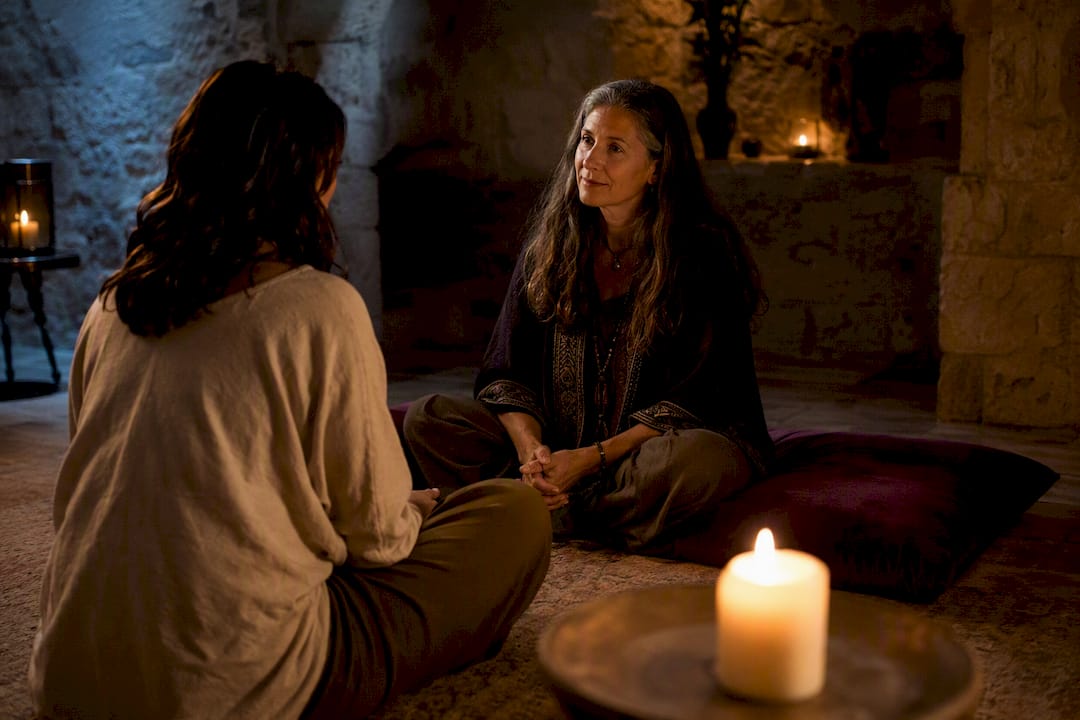
A spiritual mentor is a companion who listens closely and helps you notice what feels sacred in your ordinary days, offering discernment rather than diagnosis. The value is in prayerful presence, not answers handed down from above. If you want one, the next step is simple: ask a community, retreat center, or trusted directory like Spiritual Network for a short introductory conversation before committing to anything.
TL;DR:
Most spiritual mentors charge around $75 an hour, with many offering sliding scale fees or free sessions through community programs.
Sessions typically occur once a month and last about an hour, with online options increasing access beyond local settings.
Mentors focus on prayerful listening and discernment, helping you notice sacred moments without providing solutions or fixes.
It is essential to ask about confidentiality, training, and boundaries before starting, and avoid mentors who pressure long-term commitments or claim to cure issues.
The Spiritual Network provides a directory to browse practitioners by tradition, practice, and location, with guidance on questions to ask before engaging.
What Is a Spiritual Mentor?
A spiritual mentor, sometimes called a spiritual director or guide, is someone who walks alongside you as you pay attention to your inner life. In many traditions, this role centers on prayerful listening and discernment, helping you notice where something larger than yourself might be moving through your ordinary experience. The relationship is built on companionship, not correction.
This is different from therapy or life coaching. A therapist works with your mental health; a coach works toward goals and milestones. A spiritual mentor works with your relationship to the sacred, whatever language you use for that. Spiritual direction, as practiced in many Christian communities, typically involves one person listening while another reflects aloud on their spiritual life, often once a month for about an hour.
Formats vary. Some mentors meet one-on-one, others lead small groups or offer guidance during retreats. Increasingly, sessions happen online, which opens the door to guides you would never meet locally.
What a Mentor Actually Does, and What You Might Notice
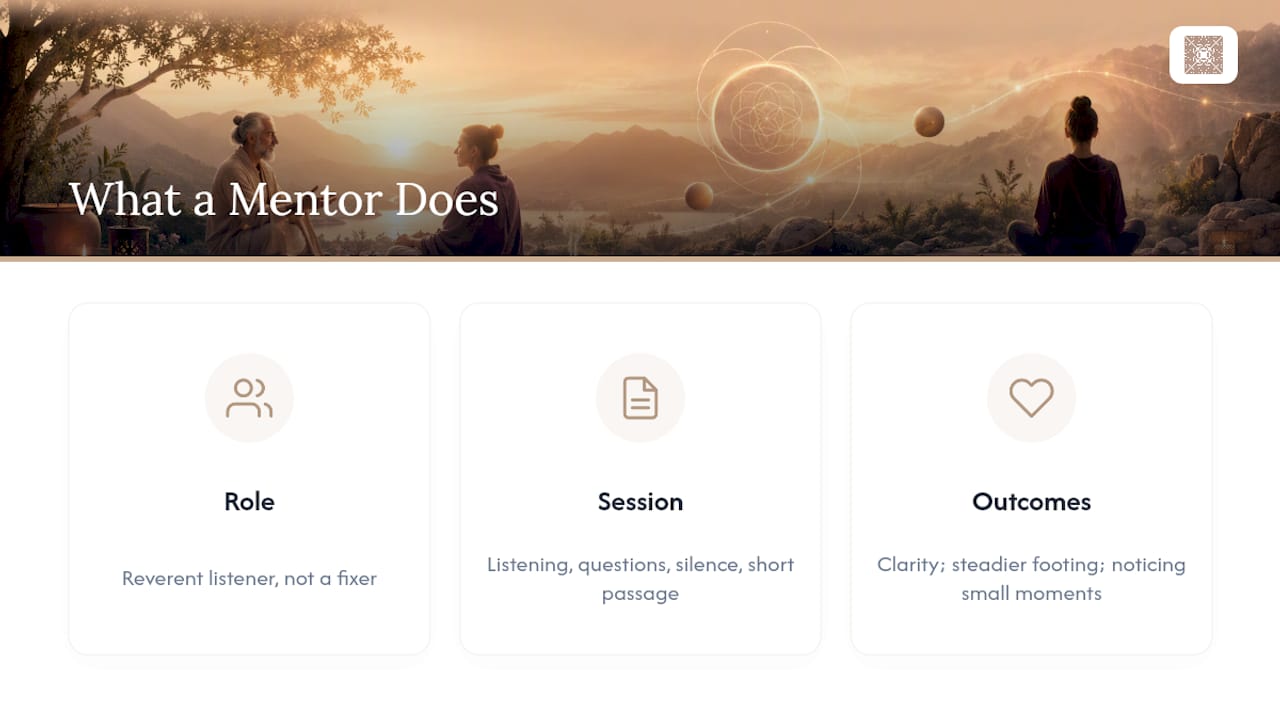
Think of a mentor as a reverent listener first. Their job is not to solve your life but to help you hear what is already stirring inside it. Sessions might include quiet listening, a few reflective questions, a shared silence, or a simple contemplative exercise like reading a short passage together and noticing what rises.
Some mentors suggest a small practice to carry into the following weeks. Nothing elaborate. Maybe a few minutes of stillness each morning, or a walk taken with attention instead of distraction.
Seekers who work with a mentor over time often describe a few shifts: more clarity about what actually matters to them, a steadier footing during hard seasons, and a habit of noticing small sacred moments they used to walk right past. None of this is a guarantee, and a mentor is not there to fix what you are carrying. The relationship is meant to accompany your path, alongside whatever medical or emotional support you already have in place.
Who Looks for a Mentor, and Which Kind Fits
People usually come looking during a transition: a move, a loss, a question about calling, or simply a hunger to go deeper in a practice that has gone stale. Others arrive after conventional care has done what it can, still carrying something unnamed that medicine alone did not reach.
Mentors show up in different forms depending on tradition and training. Spiritual direction rooted in Christian formation focuses on discernment and prayer. An interspiritual or intuitive guide might draw from several traditions at once. A healer oriented toward energy work, Reiki, or shamanic practice brings a different lens entirely, one built around the body and subtle energy rather than doctrine.
Before searching, ask yourself three quick questions: What language feels honest to me (faith based, secular, energetic)? What kind of structure do I want (weekly check ins, monthly depth, retreat intensives)? And what matters more, shared tradition or shared openness?

Where to Find a Spiritual Mentor
Start close to home before you search far afield. A congregation, meditation center, or local spiritual community often has a referral list of people already known within that circle. Monasteries and retreat centers frequently host trained guides, and many offer sliding scale fees, making them one of the more accessible entry points, especially for a first conversation.
Beyond that, several channels are worth checking:
Denominational or tradition-specific directories, which list mentors credentialed within a specific formation program
Referrals from friends, clergy, or a therapist who works alongside spiritual practitioners
Retreat centers and monasteries, many of which welcome inquiries even from non-attendees
Online directories and marketplaces, including Spiritual Network, where you can browse practitioner profiles by practice and location
Community workshops or events, which let you meet a potential mentor before ever booking a private session
When you filter results, narrow by tradition, practice style, availability, and price before you narrow by anything else. And before your first real meeting, do a basic safety check: ask directly about confidentiality, ask how they were trained, and notice whether they seem comfortable naming the limits of what they offer.
How to Choose the Right Mentor for You
Fit matters more than credentials, though credentials still matter. A useful lens comes down to three things: how someone listens, what they say about their own practice, and what seems to govern their heart and mind when you talk with them. None of this requires the mentor to be flawless. It just requires honesty.
Before committing to ongoing sessions, ask a few direct questions:
What is your training or formation background, and who oversees or supports your practice?
What does a typical session look like, and how often would we meet?
What do you charge, and is a sliding scale available?
How do you handle confidentiality, and what are the limits of that confidentiality?
What is your own spiritual or theological orientation, and how does it shape your approach?
Can you share references or point me toward others you have worked with in this way?
Pro Tip: Treat the first conversation like an interview, not a commitment. A grounded mentor expects these questions and will not flinch at any of them.
Watch for red flags too. Be wary of anyone pressuring you into buying a package of sessions upfront, anyone promising to cure what you are carrying, or anyone who resists the idea of you staying connected to a doctor or therapist alongside the mentoring relationship. A mentor worth your time welcomes that coordination rather than competing with it.
What Happens in a First Session
Most spiritual direction runs about an hour, often monthly rather than weekly, though some mentors offer more frequent check ins early on. Online sessions tend to feel a little more relaxed logistically; in person sessions, especially at a retreat center, sometimes carry more weight simply because of the setting.
Fees vary widely. Some monastery based programs suggest $75 an hour with a sliding scale for those who need it, and many community programs offer free or low-cost guidance through volunteer trained guides. Ask upfront rather than guessing.
Give it two or three meetings before deciding if the fit is right. If it is not, you can simply say the rhythm does not feel like the right match right now and thank them for their time. No explanation is owed beyond that.
How Spiritual Network Helps You Find the Right Companion
Spiritual Network brings together a searchable directory of healers and guides, along with session listings, workshops, and retreats, so you are not left guessing where to start. You can filter by practice, tradition, and location to find someone whose approach matches what you are carrying right now.
Every practitioner profile is independent, and none are presented as endorsed or vetted as a group, so the early questions above still matter. From there, you can save a profile, follow a practitioner’s updates, send a message, or book an introductory session directly through the free Spine App, which keeps everything you find in one place as your path continues.
Ethical Boundaries Every Mentoring Relationship Should Have
A healthy mentoring relationship rests on a few unglamorous but essential agreements. Confidentiality comes first: what you share should stay contained, with clear boundaries around who, if anyone, a mentor might consult and under what circumstances. Ask about this plainly before you open up.
Power matters too. A mentor holds a certain kind of authority in the room, even an informal one, and a grounded mentor stays alert to that instead of exploiting it. Dual roles are worth watching for. A mentor who is also your employer, your romantic partner, or someone financially entangled with you in unrelated ways introduces conflicts that are hard to untangle later.
Money deserves its own honesty. Fees should be stated clearly upfront, sliding scale options disclosed rather than hidden, and no mentor should pressure you toward long-term financial commitments before you have found your footing together.
Perhaps most important: a mentor should never present themselves as a substitute for medical or mental health care. The strongest mentors see their role as walking alongside licensed providers, not instead of them, and will encourage you to keep any existing care in place. If someone resists that coordination, or seems more interested in dependency than your own growing discernment, that is worth naming and, if needed, walking away from.
Ready to Start Looking?
You do not need to master every tradition before you take a first step. Curiosity is enough. If something in this article stirred a question, that question is a fine place to begin, whether it points you toward a Reiki practitioner, a shamanic guide, or a director trained in a specific faith tradition.
[

Spiritual Network gathers healers, guides, and mentors from many traditions into one searchable place, so you are not stuck guessing which directory to trust or cold-calling a monastery three states away. Browse practitioner profiles by practice, tradition, and location, check out upcoming workshops and retreats near you or online, and when something resonates, message a practitioner directly to ask the questions this article walked through. None of this replaces the medical or mental health care you already have. It simply opens another door alongside it. Start by exploring Spiritual Network and see who is listed near you, or download the free Spine App to keep your saved practitioners and sessions in one place as your path unfolds.
FAQ
What Is the Role of a Spiritual Mentor?
A spiritual mentor listens closely and helps you notice the sacred within your own life, offering discernment and companionship rather than clinical advice or fixed answers.
Where Can I Find a Spiritual Mentor?
Start with local communities, monasteries, or retreat centers, then expand to denominational directories and online platforms such as Spiritual Network, which lists practitioners by practice and tradition.
What Does the Bible Say About Spiritual Mentorship?
Christian tradition points to mentorship as a form of discipleship and discernment, with figures like Paul and Timothy often cited as examples of guided spiritual formation passed from one person to another.
What Are the Three Types of Mentorship?
Common categories include tradition based spiritual direction, interspiritual or intuitive guidance drawing from multiple paths, and healer oriented mentorship centered on practices like energy work or shamanic guidance.
How Much Does a Spiritual Mentor Typically Cost?
Fees vary widely; some monastery programs suggest around $75 an hour with sliding scale options, and many community based guides offer free or low-cost sessions.
How Often Should I Meet With a Spiritual Mentor?
Monthly, hour-long sessions are common, though some mentors offer more frequent check ins, especially in the early stages of the relationship.
Is a Spiritual Mentor a Replacement for Therapy?
No. A spiritual mentor accompanies your spiritual life alongside medical or mental health care, never in place of it, and a trustworthy mentor will encourage you to keep both in place.
Comments