
Trauma Aware Sound Healing Instruments That Hold Space for Seekers

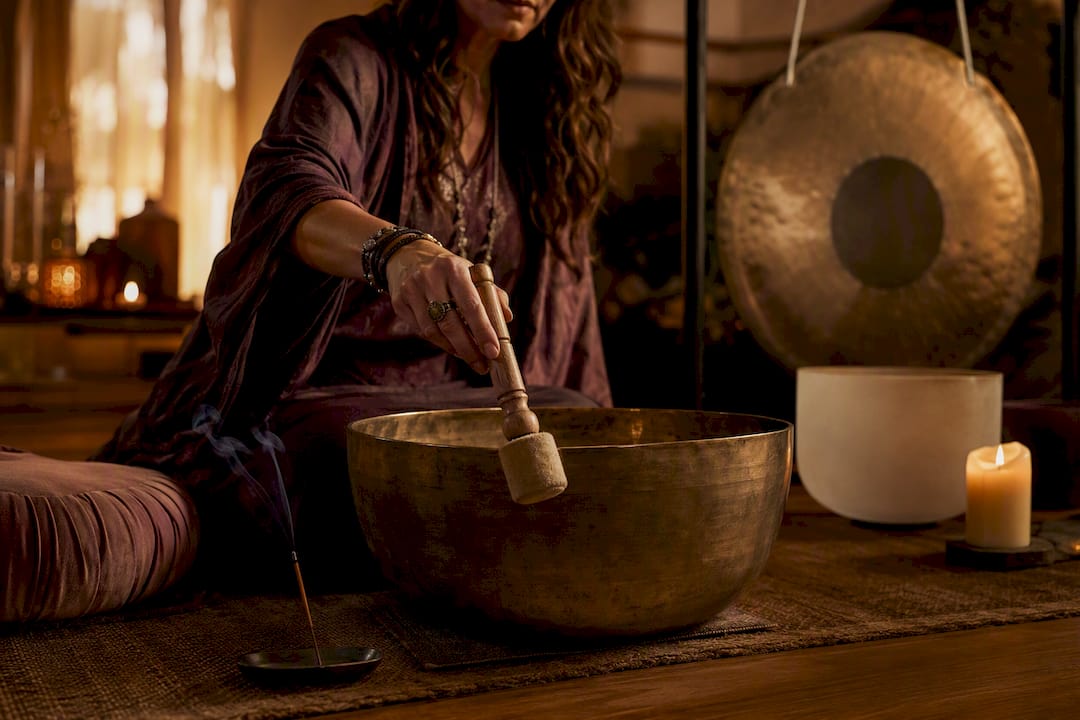
Sound healing instruments are the singing bowls, gongs, tuning forks, and chimes that practitioners use to build an immersive listening space during a session. Played with care, they support relaxation and can help settle an overactive nervous system, though they work alongside conventional care rather than in place of it. Instruments like Tibetan singing bowls and gongs shape the room; how a practitioner arranges them shapes what you feel.
TL;DR:
Most sound healing sessions involve carefully arranged instruments like gongs and singing bowls, with volume and placement tailored to participant sensitivity.
Trauma-aware practitioners often introduce gentle methods, such as softer instruments and clear signals, to accommodate sound-sensitive individuals.
Short-term benefits include reduced tension and anxiety, but there is limited clinical evidence, so sessions should complement rather than replace medical care.
Preparing for a session by asking about instruments, volume, and trauma-awareness can improve safety, especially for those with sound sensitivities or trauma histories.
Attending mindfully by arriving early, respecting silence, and noticing avoidance patterns can enhance therapeutic outcomes and promote effective aftercare.
What Sound Healing Instruments Are Used in a Session?
Every instrument in a sound bath brings a different texture to the room, and practitioners lean on those differences the way a composer leans on different instruments in an orchestra. Some tools rumble in the chest. Others sit in a single, clean tone that barely moves. Understanding what each one contributes helps you know what you are walking into.
Metal singing bowls (often called Tibetan or Himalayan bowls) produce dense, layered overtones with a warm, slow sustain. Practitioners often place these on or near the body during one-to-one work, or layer several together as a foundational bed of sound in group sessions.
Crystal singing bowls ring out with a purer, more piercing sustain than metal bowls. Because the tone holds so steadily, facilitators often use them to build a sustained harmonic bed that other sounds move around.
Gongs carry broadband, low-frequency content that you feel as much as hear, often as real pressure across the chest. That intensity can be grounding for some participants and overwhelming for others, which is why gong volume gets special attention from an experienced facilitator.
Tuning forks hold a single, fixed pitch, which makes them useful for close, targeted work, pressed near a specific point on the body or held just off the skin to draw focused attention to one area.
Chimes, tingshas, and small percussion offer bright, high-frequency accents. Facilitators use them as sonic punctuation, marking the start of a section, a shift in pace, or the close of a session.
Vibroacoustic devices and voice or overtone-based practices appear less often but round out the field, using sustained tone or vibration transmitted through a table or mat rather than open air.
None of these tools is inherently better than another. A practitioner working with someone who is sound-sensitive might build an entire session around tuning forks and quiet bowl work, skipping gongs altogether.
What Happens During a Sound-Healing Session?
Formats vary, but most sessions follow a recognizable arc, whether you are lying on a mat in a room of forty strangers or sitting across from one practitioner.
Arrival and grounding. A brief opening, often a few minutes of settling, breath, or simple instruction on what to expect.
The sound sequence. Instruments enter gradually, moving through louder and softer passages, with the practitioner reading the room as they go.
Points of silence. Pauses between instruments or passages, which do real work of their own by giving your nervous system a moment to integrate what it just heard.
Closing. A slow return, sometimes with a bell or chime, followed by a few minutes of quiet before anyone speaks.
Group sound baths typically run for a duration commonly around an hour, in a lie-down format with minimal individual attention. One-to-one sessions run shorter and start with an intake conversation, letting the practitioner tailor instrument choice and placement to what you actually need that day. You will also find variants: gong baths built around one dominant instrument, vibroacoustic sessions using tables or mats that transmit vibration directly, and overtone or voice-led events that swap instruments for the human voice.
How Do Practitioners Arrange and Play These Instruments?
A skilled facilitator treats a session like a composition, not a playlist. They decide which instrument opens the space, when a gong is allowed to build to its full volume, and how long a silence should stretch before the next sound arrives. Those decisions, made moment by moment, determine whether a session feels like a gentle unfolding or an unexpected jolt.
Volume and distance matter more than most first-time participants expect. A gong played too close, too soon, can startle a nervous system that hasn’t had time to settle. Experienced practitioners build in a gradual approach: softer instruments first, distance maintained on louder ones, and a clear sense of where each person is seated relative to the loudest sound source in the room.
Trauma-aware practice has become a more visible part of this work, and for good reason. That looks like:
A short intake conversation, even in a group setting, checking for sound sensitivity or a preference to sit farther from the gong.
A clear, spoken signal for anyone who needs to step out, adjust their position, or ask for quiet.
Offering tuning-fork contact work instead of louder instruments for someone who prefers a gentler entry point.
Skipping sudden loud passages entirely for participants who are sound-sensitive or navigating something that makes unexpected loud noise hard to sit with.
Pro Tip: If you know loud, sudden sound is hard for you, say so before the session starts, not partway through. A practitioner who has thought about trauma-aware facilitation will welcome that conversation, not treat it as an inconvenience.
How Do You Choose and Prepare for a Session?
A few questions before you book will tell you almost everything you need to know about how a session is run.
What instruments will be used, and how loud does the room typically get?
Is there an intake conversation, even briefly, before the session begins?
Have you had any training in trauma-aware facilitation, and what does that look like in practice?
What is your cancellation or refund policy if I need to leave early?
Watch for a few red flags, too. Anyone promising a cure, a fix, or a guaranteed outcome is overselling what sound work can honestly offer. A total absence of any intake or consent conversation, especially in a smaller group, is worth noticing. So is a facilitator who pressures forced breathwork or pushes emotionally loaded prompts without checking how you are doing.
On the practical side: rest the night before if you can, drink water, and wear something comfortable enough to lie still in for an hour. Earplugs or an eye mask are reasonable to bring if gongs tend to be a lot for you. Give yourself a plan for afterward, even something as simple as a quiet car ride home instead of rushing straight into errands.
Attending With Care: Etiquette, Aftercare, and Noticing Avoidance
Simple etiquette makes a session better for everyone in the room. Arrive a few minutes early, respect silence once it starts, and stay on your mat unless the facilitator says otherwise.
There is something else worth naming gently: busyness is one of the most common and understandable ways people avoid sitting with what they are carrying. Filling every hour, every silence, every stretch of stillness is not a failure of discipline. It is a pattern many people learn early, often for good reason, and a sound-healing session is sometimes the first quiet room a person has sat in for weeks. If you notice yourself mentally drafting a to-do list the moment the room goes quiet, that noticing is the point, not a problem to fix immediately.
Try one simple prompt afterward: “What was I avoiding by staying busy this week?”
A single slow breath before you reach for your phone can be enough to notice the pull back into motion.
Hydrate, rest if you can, and jot down a few impressions while they are fresh.
Pro Tip: You don’t need to resolve what comes up during a session on the same day. Writing one line down and returning to it later is enough.
If something strong surfaces, checking in with the practitioner afterward, even briefly, is a reasonable and common step.
How Spiritual Network Helps You Find Trauma-Aware Sessions
Spiritual Network connects seekers to healers, sound-healing sessions, workshops, retreats, and podcasts worldwide, both online and in person, all through the free Spine App. Practitioner profiles offer information about identity or qualifications, though practitioners as a group are not vetted or endorsed. Reading a practitioner’s profile and intake notes before booking still matters. For more on what trauma-aware facilitation actually looks like, this guide to trauma-informed spiritual care is a useful next read, alongside practical guidance on trauma-aware sound baths.
Where Did Sound Healing Instruments Come From?
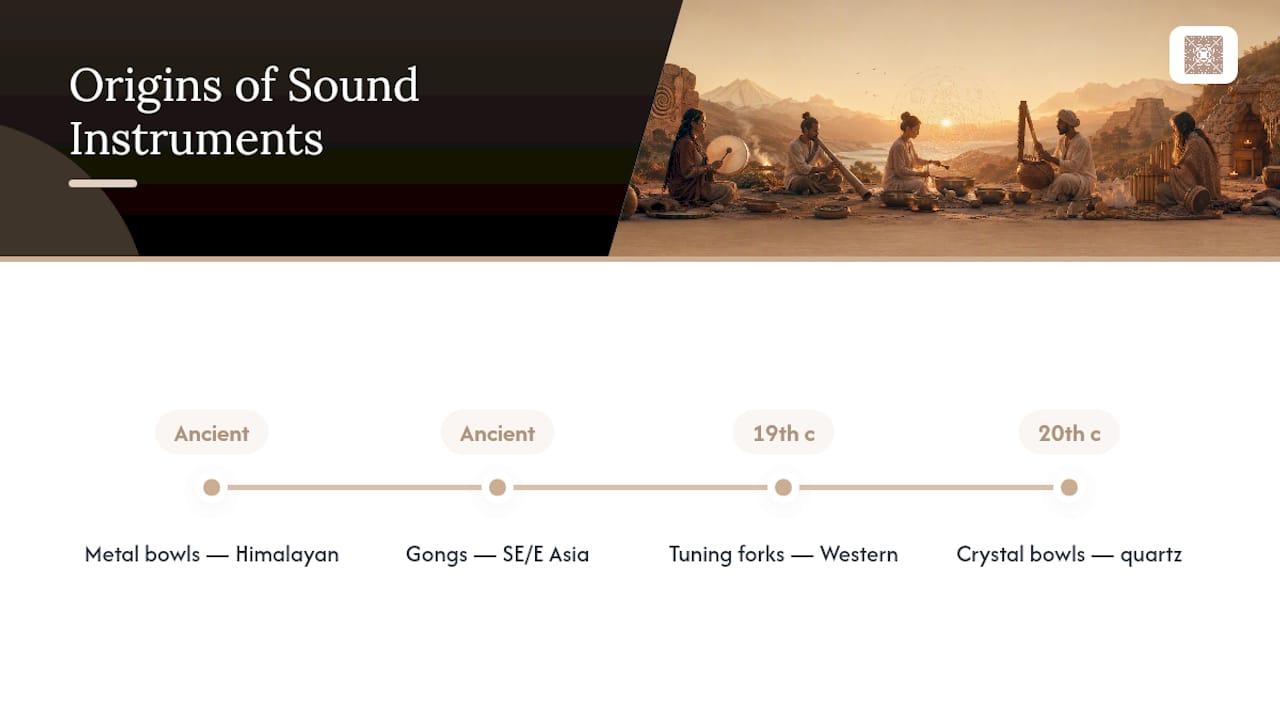
Sound as a spiritual practice is old, and its instruments carry that history in their form. Metal singing bowls trace back through Himalayan and broader Asian traditions, originally used in ritual and daily life long before Western wellness culture adopted them. Gongs have roots across Southeast and East Asian ceremonial practice, historically used to mark time, call communities together, and accompany ritual. Tuning forks are the outlier: a 19th-century Western tool, originally built for musical tuning and later adapted by sound practitioners for body-focused, targeted work.
Crystal singing bowls are the newest addition to this lineup, developed in the 20th century using quartz technology rather than centuries-old metalworking. Their sound is a modern invention layered onto an ancient practice.
What ties these traditions together is not a single shared origin but a recurring human instinct: using sustained tone and vibration to mark sacred space, support ritual, or accompany a shift in state. Modern sound baths borrow instruments from multiple, distinct cultural lineages and place them side by side in a way that would not have happened in their original contexts. Worth knowing, and worth a moment of respect, is that these are not props. They come from lived traditions, and a thoughtful practitioner will usually acknowledge that history rather than present the instruments as generic wellness gear.
How Are Sound Healing Instruments Maintained and Cared For?
Metal singing bowls hold up well with basic care: a soft cloth to wipe away fingerprints and dust, and avoiding harsh cleaners that can dull the metal’s surface and, over time, change its tone. Crystal bowls need gentler handling since quartz can chip or crack; many practitioners store them in padded cases and clean them with a barely damp cloth, never submerging them.
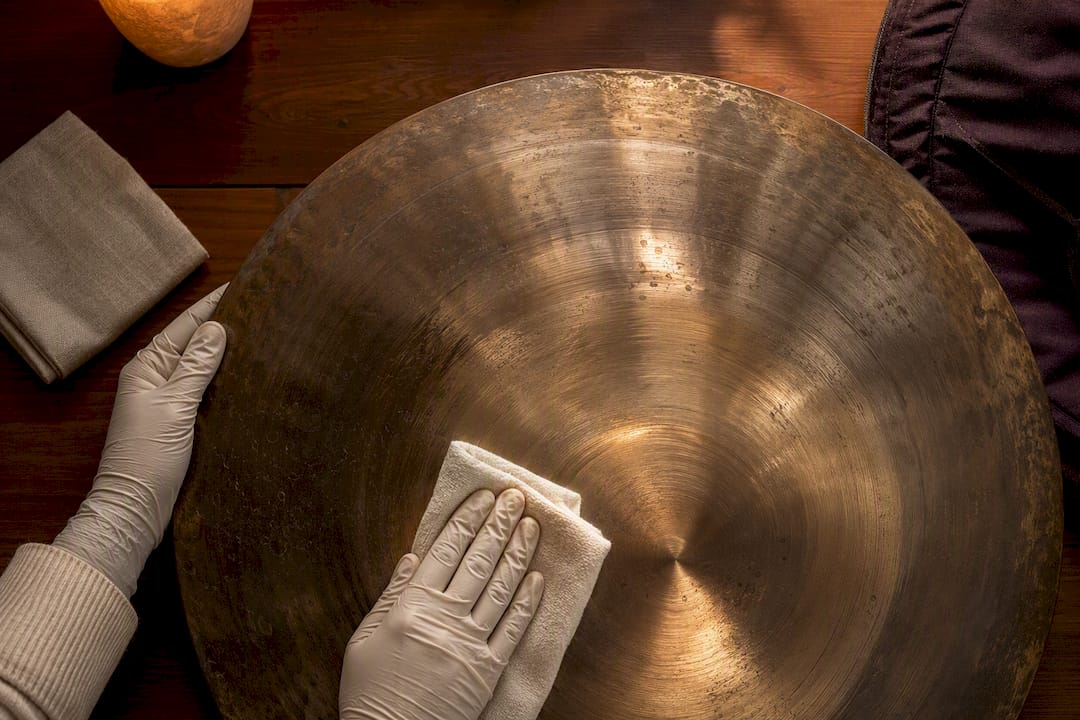
Gongs require the most deliberate care of any instrument in this list. Their surface is sensitive to fingerprints and moisture, so practitioners typically handle them by the rim only, using gloves or a clean cloth, and store them upright in padded covers to protect the metal from dents that would change how it resonates.
Tuning forks are the simplest to maintain: a wipe after each use, dry storage, and avoiding drops, since a bent fork will no longer strike its intended pitch cleanly. Mallets and beaters deserve their own attention too. A worn or damaged mallet head changes the tone of everything it strikes, so practitioners who play regularly tend to replace them well before they look obviously worn.
Materials and Sound: What Actually Sets These Instruments Apart?
The material an instrument is made from shapes its sound as much as its size does. Metal singing bowls, typically bronze or a blend of several metals, produce a dense stack of overtones. Multiple frequencies ring at once, which is why a single struck bowl can sound almost like a small chord rather than one clean note.
Crystal bowls, made from quartz, behave differently. Their sound is purer and more singular, closer to one dominant frequency with far less harmonic complexity than a metal bowl. That difference is why crystal bowls are often chosen for sustained tonal beds, while metal bowls get chosen for their textured, layered presence.
Gongs, usually bronze, generate what’s known as broadband sound. Instead of a clean tone or a stack of related overtones, a gong produces a wide spread of frequencies at once, including very low ones you feel as pressure rather than pitch. That’s the physical basis for the chest sensation many people describe during a gong bath.
Tuning forks are engineered, not shaped by tradition, and that shows in their sound: one fixed, unwavering pitch, with almost none of the harmonic richness of a bowl or gong. That precision is exactly why practitioners reach for them in targeted, close-range work rather than as a room-filling instrument.
How Do These Instruments Affect the Body and Mind?
The short answer is that researchers are still working out the mechanism, but the pattern in current findings is consistent enough to describe carefully. Several studies and reviews report short-term reductions in tension, anxiety, and fatigue after singing-bowl or sound-immersion sessions, along with measurable shifts in heart-rate variability in some trials. The evidence base remains small, with limited sample sizes and few tightly controlled studies, so these findings point toward a real, supportive effect on relaxation rather than proof of a therapeutic cure.
Physiologically, sustained tone and vibration appear to interact with the body’s stress response in ways that echo other slow, rhythmic practices like paced breathing or humming. Psychologically, the effect may have as much to do with the container itself: an hour of enforced stillness, minimal stimulation, and permission to simply lie down and listen is rare in most people’s lives, independent of any specific instrument. A narrative review of sound therapy in clinical and wellness settings frames it as a non-invasive practice with real potential for relaxation and emotional support, while cautioning that clinical evidence remains limited and more rigorous research is still needed. That is the honest, current state of the science: promising, early, and worth approaching with curiosity rather than certainty.
Ready to Find a Session That Fits You?
If any of this has you curious about trying a sound bath, or you are a practitioner building sessions with intention and care, Spiritual Network is built for exactly this kind of search. Instead of guessing which local studio or event might actually offer trauma-aware facilitation, you can browse healers, sessions, workshops, retreats, and podcasts in one place, worldwide or close to home, through the free Spine App.
[

Spiritual Network connects you to practitioners and events without ever positioning sound work as a replacement for medical care. It stands alongside it, as one part of a broader spiritual path you get to shape yourself. Browse session listings and practitioner profiles to see what a trauma-aware sound bath near you actually looks like, or explore related healing modalities if you are still figuring out what kind of support fits where you are right now. Open the free Spine App and start with a search, no pressure to book anything before you feel ready.
Selected Research and Practical Sources
The human health effects of singing bowls: A systematic review, Complementary Therapies in Medicine (2020), on short-term mood and heart-rate-variability changes
A narrative review of sound therapy in clinical and wellness settings, covering singing bowls and gongs
Cleveland Clinic and WebMD plain-language overviews of sound baths, common instruments, and current research limits
FAQ
What are sound healing instruments?
They are the tools practitioners use in a sound-healing session, most commonly metal or crystal singing bowls, gongs, tuning forks, and chimes, each contributing a different texture to the sound.
Can sound healing instruments cure anxiety or chronic pain?
No.
What is the difference between a Tibetan bowl and a crystal bowl?
Metal singing bowls produce dense, layered overtones with a textured sound, while crystal bowls, made from quartz, produce a purer, more singular tone with less harmonic complexity.
How loud does a gong get in a sound bath?
Gongs produce broadband, low-frequency sound that can feel intense at close range, which is why trauma-aware practitioners manage distance and volume carefully for sound-sensitive participants.
How do I find a trauma-aware sound-healing session?
Ask potential facilitators about their intake process, expected volume, and any trauma-aware training before booking, and use a platform like Spiritual Network to review practitioner profiles in advance.
Is it normal to feel emotional during or after a sound bath?
Yes, sessions often create the first quiet a person has had in weeks, and unexpected feelings, including a pull to stay “busy” instead of sitting with what surfaces, are a common, understandable response.
What should I bring to a group sound-healing session?
Comfortable clothing, water, and optionally earplugs or an eye mask if gongs or bright chimes tend to feel like a lot, along with a plan for a quiet transition afterward.
Comments