
Choosing a Breathwork Workshop: 5 Trauma-Informed Checks

Updated: Sep 22

The most important choice is matching the workshop’s style and safety practices to your own goals and body. If you want calm, choose a gentle session built on box breathing or extended exhales. If you’re drawn to something more cathartic, look for a facilitator who screens participants, names contraindications clearly, and offers a way to opt out. When you’re new to breathwork, start gentle before you consider anything more intense.
TL;DR:
Choose gentle breathwork styles like box breathing or guided relaxation if you are new and seeking stress reduction, before exploring more intense practices.
Ensure facilitators ask about health conditions such as pregnancy, cardiovascular concerns, or epilepsy, and verify their experience and trauma-informed approach beforehand.
Be cautious with intense styles like holotropic or somatic breathwork, especially if you have a history of dissociation, fainting, or active psychiatric issues, and confirm modifications are offered during sessions.
Prepare by bringing water, wearing comfortable clothes, arriving early, and avoiding heavy meals, while allowing time afterward for grounding and rest.
Use directories like Spiritual Network to find reputable, trauma-informed facilitators, and check reviews for specific support and safety details before booking.
What Should You Look for When Choosing a Breathwork Workshop?
Choosing a breathwork workshop well means asking questions before you ever hand over payment. A calm, clear-headed comparison of a few options will tell you more than any glossy description ever will.
Start with your own intention. Are you hoping to unwind after a hard stretch of months, sleep better, or move through something heavier, like grief or a held tension you can’t name? Your goal should point you toward a style, not the other way around.
From there, work through a short list of practical checks:
Screening and contraindications. Does the facilitator ask about your health history, or mention conditions like pregnancy, cardiovascular concerns, or epilepsy before the session begins?
Training and experience. How long has the facilitator been guiding sessions, and do they mention any ongoing mentorship or supervision in their own practice?
Group size and format. A smaller group or one-on-one setting usually allows more individual attention than a crowded workshop.
Trauma-informed language. Listen for phrases about choice, modification, and consent rather than a single expected outcome.
Music, pacing, and support. Ask whether there’s dedicated integration time built in, not just the active breathing itself.
Price, cancellation policy, and what to bring. These are small details, but they tell you how organized and transparent the provider is.
A useful test: email or message the facilitator with one direct question before booking, something like “What happens if I feel overwhelmed partway through?” A thoughtful, specific answer says more about their readiness than any bio ever could.
Which Breathwork Styles Suit Beginners, and Which Are More Intense?
Breathwork styles sit on a spectrum from calming to intense, and knowing where a technique falls matters more than knowing its name. Gentle styles emphasize longer, slower exhales, coherent breathing, and guided relaxation, and they’re generally aimed at stress reduction and better sleep rather than emotional release. If your goal is to feel less wound up at the end of a long week, this is where to begin.
On the other end sits conscious connected breathing, somatic breathwork, and the practice often called holotropic breathwork. These styles can produce strong physical sensations, tingling, waves of heat or cold, and emotional release that can feel intense in the moment. They’re best guided by a trained facilitator who watches the room closely and knows how to support someone through a difficult wave rather than leave them in it.
A well-run workshop offers modifications inside the same session: you can breathe more gently, pause, or open your eyes at any point without being singled out. That flexibility is a strong sign you’re in capable hands.
Gentle styles: box breathing, coherent breathing, guided relaxation.
Intense styles: conscious connected breathing, somatic breathwork, holotropic breathwork.
Beginner guidance: try a gentle session first, then decide deliberately if you want to go further.
What Contraindications and Safety Signs Should You Check Before Booking?
Breathwork asks a lot of your nervous system, so a responsible facilitator screens for a few conditions before anyone starts breathing actively. This isn’t paperwork for its own sake; it’s how a facilitator decides whether a technique is appropriate for you on that particular day.
Cardiovascular conditions. Rapid or forceful breathing changes blood pressure and heart rate, so this needs a conversation first.
Epilepsy or a history of seizures. Certain breathing patterns can be a trigger, and any responsible facilitator will ask about this directly.
Pregnancy. Many intense styles are set aside or modified during pregnancy.
A history of fainting or dissociation. These deserve a heads up so the facilitator can watch for early signs and step in.
Active psychosis or unstable psychiatric conditions. Intense breathwork can amplify activation rather than settle it, so this calls for real caution and often a conversation with a mental health provider first.
If you’d like to mention your interest in breathwork to a doctor or therapist you already see, you don’t need a dramatic disclosure. A simple line works well: “I’m exploring some breathing and relaxation practices alongside my usual care. Do you see any reason I should be cautious?” Most providers respond well to plain, curious language, and framing it as something you’re adding, not replacing, tends to keep the conversation easy and judgment-free.
Watch for red flags when booking: no intake questions at all, vague reassurances like “just trust the process,” or any pressure to push through when you say you want to stop.
What Happens During a Breathwork Session, and How Do You Prepare?
A typical session follows a familiar rhythm: intake and orientation, a technique demonstration, active breathing guided by the facilitator, then a dedicated integration period, often around ten to twenty minutes of quiet or gentle discussion. Many first-timers are advised to leave an hour open afterward to rest or ground before returning to a busy schedule.
During active breathing, it’s normal to notice tingling in your hands or face, shifts in temperature, or unexpected emotion surfacing. None of this signals something has gone wrong. Good facilitators normalize this wide range of sensations and remind you that you always have a choice in how deeply you engage.
Bring water and wear comfortable clothing you can move in.
Eat lightly beforehand rather than on a full stomach.
Arrive (or log on) a few minutes early so you’re not rushed into the intake.
Afterward, avoid driving right away if you feel disoriented, and give yourself time before jumping into anything demanding.
For online workshops, check your camera, microphone, and internet connection ahead of time, and ask what privacy measures the facilitator uses for video sessions.
If you’re joining from home, pick a room where you won’t be interrupted. A closed door does more for your sense of safety than you’d expect.
How Do You Integrate and Care for Yourself Afterward?
What you do in the hours after a session often shapes how the experience settles. Give yourself real downtime rather than scheduling anything demanding right afterward.
Journal a few lines about what came up, even if it’s just a handful of words.
Move gently. A short walk works better than intense exercise.
Drink water and eat something nourishing.
Try a grounding practice, like feeling your feet on the floor or naming what you can see and hear around you.
Rest if you feel tired rather than pushing through the rest of your day.
If something heavy surfaced and stays with you for days rather than easing, that’s worth mentioning to a mental health professional. And if the session felt like more than you were ready for, there’s no failure in choosing a gentler format next time. Repeating the same intensity only makes sense if it served you.
How Can Spiritual Network Help You Find the Right Workshop?
A spiritual wellness directory brings together listings for breathwork workshops, circles, and events, alongside one-to-one sessions, retreats, and podcasts, worldwide, online or near you. Rather than searching by clinical labels, you describe what you are carrying in your own words, and a free app helps surface facilitators and sessions that fit what you’re looking for.
You can search listings by format: online, local, workshop, or one-to-one, read how each facilitator describes intake, safety, and trauma-informed practice, save practitioners you’re curious about to revisit before deciding, and follow topics and facilitators to stay connected beyond a single search.
What you’re looking for | Where to check it |
Beginner-friendly, gentle sessions | Listing description and session format filter |
Trauma-informed language and modifications | Facilitator bio and session notes |
Online vs. in-person options | Format filter in the Spine App |
How Do You Read Reviews and Testimonials From Past Participants?
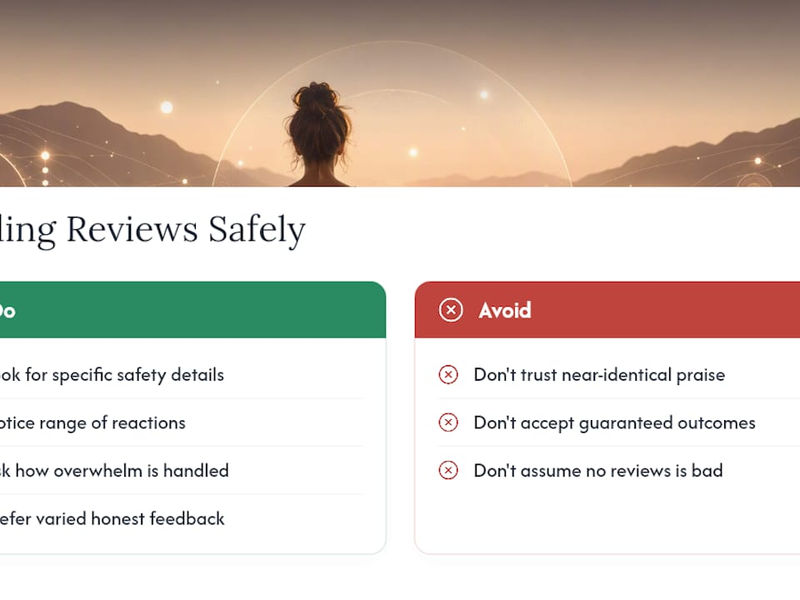
Reviews for breathwork workshops tell you something real, but only if you read them the right way. A handful of glowing, near-identical comments about “transformation” without any mention of logistics, safety, or how the facilitator handled a hard moment is worth treating with mild skepticism.
Look instead for specifics: did a reviewer mention feeling supported when something difficult came up? Did they describe the facilitator checking in, offering modifications, or explaining what to expect beforehand? Those details tend to separate an attentive facilitator from one who runs people through a script.
It also helps to notice the range. A workshop with a wide mix of feedback, some describing calm, others describing something more intense, often reflects an honest account of how different people respond to the same session rather than a curated highlight reel. Be cautious of reviews that promise a guaranteed emotional outcome; breathwork affects people differently, and no responsible facilitator claims otherwise.
If a listing has no reviews at all, that isn’t automatically a red flag, especially for newer facilitators, but it does mean you’ll want to rely more heavily on your own questions before booking. A short message asking how they handle a participant who becomes overwhelmed will often tell you more than three testimonials combined.
Where Can You Find Reputable Breathwork Workshops or Providers?
Finding a workshop you can trust starts with looking past the marketing language and toward how a provider describes their process. A reputable facilitator will usually be upfront about training, group size, and what happens if a session becomes difficult for someone in the room.
Community recommendations carry real weight. Ask people in local wellness spaces, yoga studios, or spiritual circles who they’ve worked with. Directories and platforms built specifically around holistic and spiritual practices, like Spiritual Network, can also narrow the search by letting you filter for format, location, and the kind of support you’re seeking rather than scrolling through generic search results.
Beyond that, pay attention to how a provider responds when you ask questions. An experienced facilitator will welcome a direct question about screening or safety rather than brushing it aside. And if you’re drawn to related practices, checking guidance on how to choose an energy healer can sharpen the same instincts you’ll use here, since much of what makes a breathwork facilitator trustworthy applies just as well across holistic and energy work.
Ready to Find a Workshop That Fits Where You Are?
This directory is built around one difference from a general search: you describe what you’re carrying, not a clinical label, and a free app surfaces breathwork workshops, one-to-one sessions, and events that match that description, worldwide or close to home.

Listings on Spiritual Network cover workshops, circles, retreats, and podcasts and audio guidance you can explore at your own pace between sessions. Before booking anything, take a moment to check the listing’s intake and safety notes, the same screening and contraindication details covered above, so you know what to expect before you arrive. If a particular style speaks to you, you might also look into how facilitators describe trauma-informed spiritual care to get a clearer sense of what gentler, choice-centered practice looks like in writing.
When you’re ready, search for a breathwork workshop or facilitator near you or online, and let the free Spine App do the matching.
More on this: browse every article in Finding a Guide.
FAQ
What Is the Difference Between Gentle and Intense Breathwork?
Gentle styles like box breathing and coherent breathing use slower, controlled patterns aimed at calming the nervous system, often for stress relief or better sleep. Intense styles like conscious connected breathing or holotropic breathwork use faster, more sustained breathing that can bring on strong sensations and emotional release, and they’re best approached with a trained facilitator.
How Do I Know if a Breathwork Facilitator Is Trauma-Informed?
Listen for language about choice and modification rather than a single expected outcome, and notice whether they invite questions before the session starts. A facilitator who explains what happens if you want to pause or stop, and who names contraindications clearly, is showing the kind of care worth looking for.
Is Breathwork Safe for Everyone?
Breathwork isn’t automatically safe for everyone; conditions like pregnancy, cardiovascular disease, epilepsy, and active psychiatric instability are common reasons a facilitator may recommend a gentler approach or ask you to check with a healthcare provider first. Responsible facilitators screen for these before any active breathing begins.
Should I Talk to My Doctor Before Trying Breathwork?
If you have a health condition or you’re unsure whether an intense style is appropriate for you, mentioning it to a doctor or therapist is a reasonable step. A simple line like “I’m exploring breathing practices alongside my usual care” tends to open the conversation without needing a longer explanation.
What Should I Bring to a Breathwork Workshop?
Bring water, wear comfortable clothing, and eat lightly beforehand rather than on a full stomach. If the session is online, check your camera and internet connection ahead of time and set up in a room where you won’t be interrupted.
How Much Does a Breathwork Workshop Typically Cost?
Pricing varies by facilitator, format, and location, so it’s worth checking each listing directly rather than expecting one standard rate. You can browse current workshop and session listings, along with what’s included, on Spiritual Network.
Can I Find Breathwork Workshops Online and In Person?
Yes, many providers offer both formats, and online workshops typically include their own tech checks and privacy guidance from the facilitator. Listings on spiritual and holistic directories often let you filter by online or local sessions so you can choose whichever fits your comfort and schedule.
About Spiritual Network
Spiritual Network connects you with spiritual healers, energy workers and holistic guides worldwide, online or near you. Through the free Spine App you find them, message them, and book and pay for sessions directly. Founded by Sylvia Leifheit.
Written by the Spiritual Network Editorial Team.


Comments